
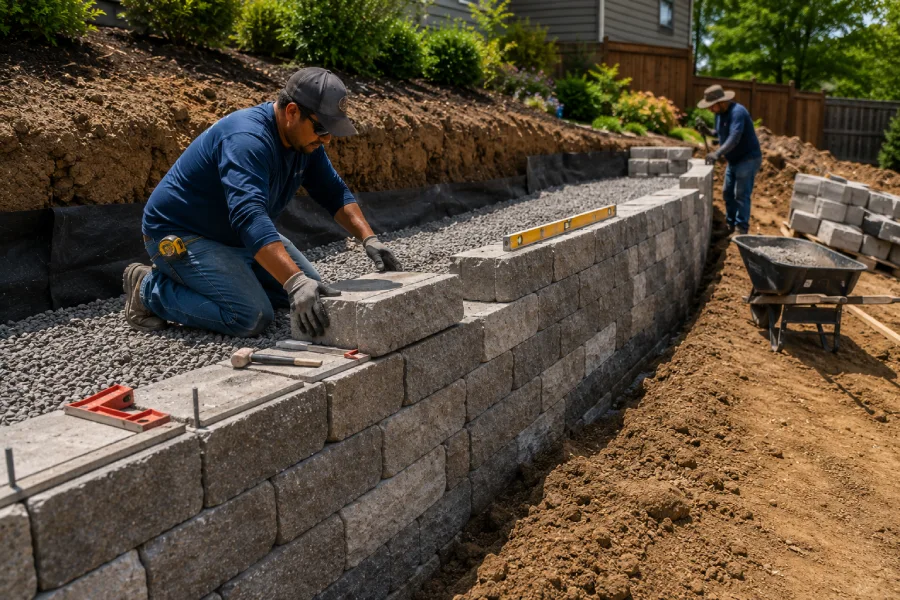
Retaining walls do more than enhance the appearance of your landscape—they play an important role in protecting your property from soil erosion, managing drainage, and providing additional support on sloped terrain. A properly designed retaining wall can help stabilize your yard while reducing the risk of soil movement that may affect nearby structures, including your home’s foundation.
Foundation Repair DFW connects homeowners throughout the Dallas–Fort Worth Metroplex with trusted local contractors who specialize in retaining wall installation and repair. Whether you’re experiencing erosion, sloping landscapes, or retaining wall damage, our network of experienced professionals can evaluate your property and recommend the most appropriate solution for your needs.
Investing in a professionally built retaining wall can improve your property’s functionality while helping protect your landscape and foundation from long-term damage.
What Are Retaining Walls?
Retaining walls are engineered structures designed to hold back soil, prevent erosion, and create stable, usable spaces on properties with changes in elevation. They are commonly used in residential landscapes to support hillsides, improve drainage, and reduce pressure caused by shifting soil.
In North Texas, changing weather conditions and expansive clay soils can contribute to erosion and ground movement. Without proper support, soil can gradually shift, wash away during heavy rain, or place additional stress on nearby foundations and landscaping.
Depending on your property’s layout and the underlying soil conditions, local contractors may recommend different retaining wall materials and designs to provide long-term stability while complementing your home’s landscape.
Common Signs You May Need a Retaining Wall
- Soil erosion around your property
- Sloping or uneven landscape
- Water runoff damaging your yard
- Existing retaining wall leaning or cracking
- Soil washing away after heavy rainfall
Common Causes of Soil Erosion and Landscape Instability
- Heavy rainfall and stormwater runoff
- Poor drainage around the property
- Expansive clay soil
- Sloped or uneven terrain
- Inadequate landscape support
How Local Contractors Typically Install or Repair Retaining Walls
Every retaining wall project begins with an evaluation of your property’s landscape, drainage, and soil conditions. Contractors inspect the area to determine what is causing erosion or instability and identify the best location and design for the retaining wall.
Depending on the project, contractors may recommend installing a new retaining wall, reinforcing an existing wall, improving drainage behind the wall, or regrading portions of the landscape to help manage water flow more effectively.
The recommended materials and construction methods vary based on the wall’s height, the amount of soil pressure, drainage requirements, and the overall layout of the property. A properly designed retaining wall helps improve both the function and appearance of your outdoor space while supporting long-term stability.
Why Choose Foundation Repair DFW?
A properly designed retaining wall must manage soil pressure, drainage, elevation changes, and long-term stability. Experienced professionals can evaluate the site, select appropriate materials, plan drainage, and construct a retaining wall suited to the property’s conditions.
Our directory helps you compare trusted professionals who can inspect your property, explain the source of the moisture problem, and recommend waterproofing solutions tailored to your home’s needs. Many contractors in our network offer foundation inspections and waterproofing evaluations, giving homeowners the information needed to make confident decisions.
Instead of spending hours researching companies, let Foundation Repair DFW help you connect with reputable local waterproofing specialists serving the Dallas–Fort Worth Metroplex.
Frequently Asked Question
Why are retaining walls important?
Retaining walls help stabilize sloped landscapes, reduce soil erosion, manage drainage, and protect outdoor spaces from shifting soil.
Can a retaining wall help protect my foundation?
In some cases, yes. By helping control soil movement and improving drainage, a retaining wall may reduce conditions that contribute to foundation problems.
How do I know if I need a retaining wall?
Signs such as soil erosion, sloping ground, water runoff, or an existing retaining wall that is leaning or cracking may indicate it’s time for a professional evaluation.
Can an existing retaining wall be repaired?
Many retaining walls can be repaired depending on the extent of the damage. A contractor can inspect the wall and recommend whether repair or replacement is the better option.
What materials are used to build retaining walls?
Retaining walls can be constructed using concrete blocks, natural stone, poured concrete, timber, or other materials depending on the property’s needs and design preferences.
Does Foundation Repair DFW build retaining walls?
No. Foundation Repair DFW is a lead generation directory that connects homeowners with trusted local contractors who specialize in retaining wall installation, repair, and other foundation-related services.