
- Foundation Problems
10 Warning Signs of Foundation Problems Every Texas Homeowner Should Know
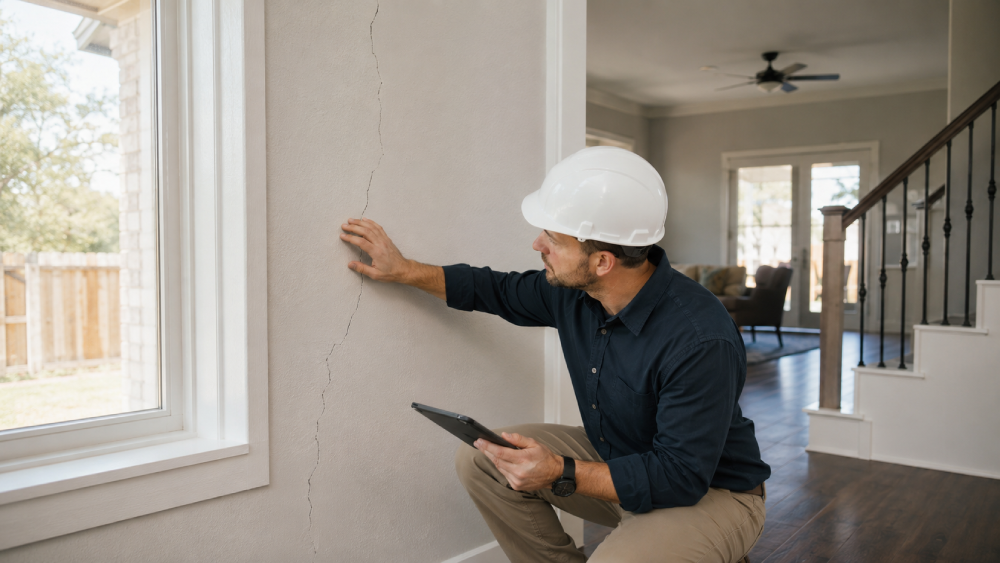
Foundation problems rarely announce themselves with one dramatic event. In many Texas homes, the first clues are small changes that appear in doors, walls, floors, brickwork, or drainage. Recognizing the pattern matters because several symptoms together are more meaningful than one isolated cosmetic flaw.
Homeowners can also review the United States Geological Survey soil resources for general information about how water, climate, and geology influence soil behavior.
When several signs appear together, schedule a structural foundation inspection instead of relying only on visual guesses.
The following ten warning signs can help you decide when to monitor a condition and when to arrange a professional foundation inspection.
1. Doors That Stick or Swing on Their Own
A door that suddenly rubs, will not latch, or swings open without being pushed may indicate that the frame is no longer square. Check several doors throughout the home. If the issue appears in multiple rooms, structural movement may be involved.
2. Windows That Are Difficult to Open
Windows can become hard to raise, close, or lock when wall openings shift. Look for gaps around the frame or cracks extending from window corners. Normal wear can affect one window, but repeated issues around the home deserve attention.
3. Diagonal Cracks Above Doors and Windows
Diagonal drywall cracks often form near openings because these areas experience stress when the structure moves. Small hairline cracks may be cosmetic. Wider cracks, recurring cracks, or cracks that continue growing should be inspected.
4. Stair Step Cracks in Brick Mortar
Cracks that follow the mortar joints in a stair step pattern can indicate differential movement. Pay attention to width, length, and whether the crack extends toward a window, door, or corner of the home.
5. Uneven or Sloping Floors
A floor that slopes, dips, or feels soft may reflect movement in a slab or damage to supports beneath a pier and beam home. Tile and wood flooring may also crack, separate, or buckle as the surface below changes.
6. Gaps Between Walls, Ceilings, and Trim
Visible separation at crown molding, baseboards, cabinets, or ceiling lines can appear when parts of the home move at different rates. New gaps that become larger over time are more concerning than stable cosmetic seams.
7. Exterior Walls Pulling Away
Look for separation between brick and siding, gaps around exterior trim, or a chimney that appears to lean away from the house. These conditions may involve foundation movement and should be reviewed promptly.
8. Cracks in Concrete Floors or the Slab
Concrete naturally develops some shrinkage cracks. A crack may deserve evaluation when it is wide, uneven from one side to the other, extends across a large area, or continues through finished flooring.
9. Plumbing Leaks or Unexplained Moisture
A leak beneath a slab can affect supporting soil, while foundation movement can also place pressure on plumbing lines. Warning signs include high water bills, damp floors, warm spots, odors, or the sound of water running when fixtures are off.
10. Drainage Problems Around the Home
Standing water, soil erosion, clogged gutters, and downspouts that release water next to the foundation can create uneven moisture conditions. Large soil gaps during dry weather also show that the ground has contracted away from the structure.
What to Do When You Notice These Signs
Take clear photos, record the date, and note whether the condition changes after rain or dry weather. Avoid repeatedly covering cracks without understanding the cause. A professional inspection can include visual review, elevation measurements, drainage observations, and recommendations for monitoring or repair.
Texas homeowners should not panic when they notice one symptom. The important step is to look at the whole property and determine whether several signs point to a consistent pattern.
Final Thoughts
Foundation concerns are easier to manage when you understand the cause and act on reliable information. If your Dallas Fort Worth home shows cracks, uneven floors, sticking doors, drainage concerns, or other signs of movement, schedule a professional inspection. DFW Foundation Services can evaluate the property, explain the findings, and recommend a practical next step based on the condition of your home.
Frequently Asked Questions
What is the most serious foundation warning sign?
Rapid movement, major floor slope, large growing cracks, or sudden plumbing symptoms deserve prompt professional attention.
Can a new home have foundation problems?
Yes. Age alone does not determine risk. Soil preparation, drainage, plumbing, weather, and construction conditions can affect both newer and older homes.
Can I monitor a small crack myself?
You can photograph and measure it, but seek professional advice if it grows, returns after repair, or appears with other symptoms.
Are brick cracks always structural?
No. Some are related to mortar or temperature movement. Pattern, width, location, and related symptoms help determine whether further evaluation is needed.
Request a foundation inspection
Get a free foundation inspection from a trusted DFW specialist.