
- Foundation Problems
How to Tell If Your Home Needs Foundation Repair in DFW
Foundation movement is common in North Texas, but not every crack or sticking door means your home needs major repairs. The challenge is knowing which changes are normal and which ones suggest that the structure is moving. Homeowners who recognize the early signs can schedule an inspection before the damage spreads to walls, floors, plumbing, and exterior masonry.
North Texas soil conditions vary by property. The Texas A&M AgriLife guide to Texas soils provides useful background on the soil types found across the state and why local evaluation matters.
The Dallas Fort Worth area has periods of intense heat, drought, and heavy rain. These moisture changes can affect the soil supporting a home. When the soil expands, contracts, or loses strength, part of the foundation may rise or settle. The signs often appear in several areas of the property at the same time.
Start With Changes Inside the Home
Walk through your home slowly and look for changes that were not present before. Doors that rub against the frame, windows that no longer open smoothly, and gaps around trim can indicate that the structure has shifted. A single sticking door may be caused by humidity or worn hardware. Several doors and windows changing at once deserve closer attention.
Look at the walls and ceilings for diagonal cracks, cracks above doorways, or separation where walls meet the ceiling. Small surface cracks in paint or drywall can be cosmetic. Wider cracks, recurring cracks, or cracks that continue growing may indicate movement beneath the home. Take dated photos and measure the width so you can see whether the condition changes over time.
Check the Floors and Interior Surfaces
Uneven, sloping, or bouncy floors can be another sign of foundation movement. Place a level on the floor in rooms where you notice a slope, or watch whether a round object rolls in one direction. Flooring may also separate, buckle, or crack when the surface below it moves.
Tile cracks are especially important when they run across several tiles in a continuous line. One damaged tile may result from an impact or installation issue. A longer crack pattern can reflect movement in the concrete slab. In pier and beam homes, soft spots and noticeable floor movement may point to damaged supports, moisture, or wood deterioration.
Inspect the Exterior of the House
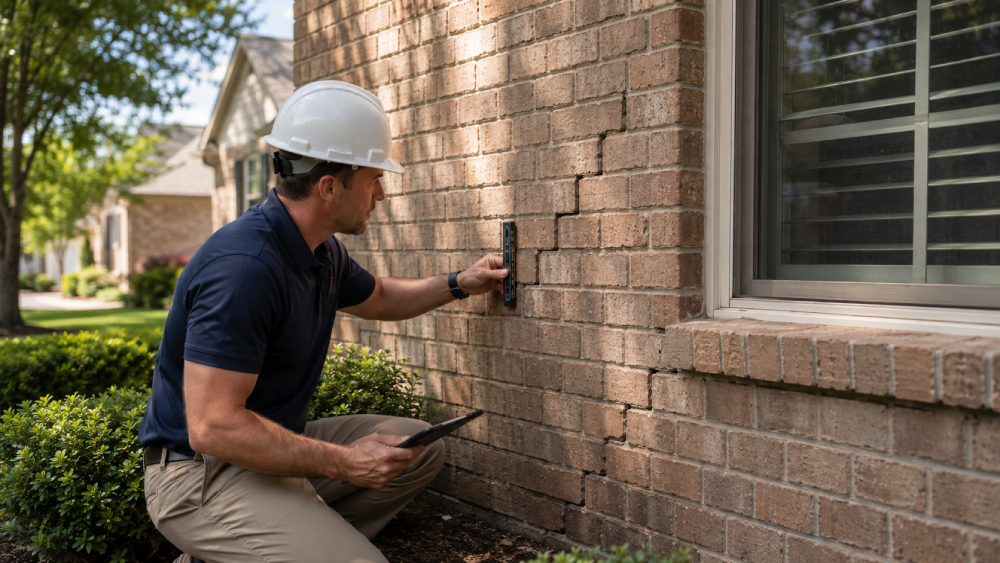
Outside, look for stair step cracks in brick mortar, gaps around windows, separation between walls and trim, or areas where the roofline appears uneven. Cracks that are wider at one end can show that one section of the house is moving differently from another.
Also inspect the soil around the foundation. Large gaps between the soil and the slab during dry weather may show that the soil has contracted. Standing water near the home after rain may indicate poor drainage. Both conditions can contribute to uneven moisture levels around the structure.
Pay Attention to Plumbing and Drainage
Unexpected increases in the water bill, warm spots on the floor, damp flooring, or the sound of running water may indicate a plumbing leak. A leak beneath a slab can soften or wash away supporting soil. Foundation movement can also place stress on plumbing lines. Because the relationship can work in either direction, a professional may recommend a plumbing test when the signs suggest an underground leak.
Gutters, downspouts, grading, and drainage systems should move water away from the house. Water that collects against one side of the foundation can create a different soil moisture level than the opposite side. Correct drainage is an important part of protecting the structure, even after repairs are completed.
When to Schedule a Professional Inspection
Schedule a professional foundation inspection when you see several warning signs, rapid changes, a crack that continues widening, or a noticeable slope in the floors. You should also request an inspection before remodeling if you suspect movement, since new finishes can hide active cracks for a short time without correcting the cause.
A foundation specialist can examine the interior and exterior, take elevation measurements, review drainage conditions, and explain whether monitoring, maintenance, or repair is appropriate. The goal is not to assume the worst. The goal is to understand what is happening and make an informed decision.
Protecting Your DFW Home
Consistent maintenance can reduce stress on the foundation. Keep gutters clear, direct downspouts away from the home, repair plumbing leaks quickly, and avoid extreme moisture differences around the structure. During long dry periods, follow professional guidance for maintaining appropriate soil moisture without overwatering.
If you notice cracks, uneven floors, sticking doors, or exterior separation, document the changes and arrange an evaluation. Early attention can make the repair plan clearer and may help prevent more extensive damage.
Final Thoughts
Foundation concerns are easier to manage when you understand the cause and act on reliable information. If your Dallas Fort Worth home shows cracks, uneven floors, sticking doors, drainage concerns, or other signs of movement, schedule a professional inspection. DFW Foundation Services can evaluate the property, explain the findings, and recommend a practical next step based on the condition of your home.
Frequently Asked Questions
Does every wall crack mean foundation damage?
No. Some cracks are cosmetic or caused by normal material movement. Cracks that widen, return after repair, appear diagonally, or occur with other warning signs should be evaluated.
How often should a foundation be inspected?
There is no universal schedule for every home. An inspection is useful when new symptoms appear, before a major renovation, or when buying or selling a property with visible concerns.
Can drainage problems cause foundation movement?
Yes. Poor drainage can create uneven soil moisture around the home. This may increase soil expansion, erosion, or settlement near the foundation.
What should I prepare for an inspection?
Gather photos, repair records, plumbing information, and notes about when the symptoms began. Clear access to walls, floors, the exterior perimeter, and crawl spaces when applicable.
Request a foundation inspection
Get a free foundation inspection from a trusted DFW specialist.