
- Foundation Repair Guides
How to Choose a Reliable Foundation Repair Company in Dallas–Fort Worth
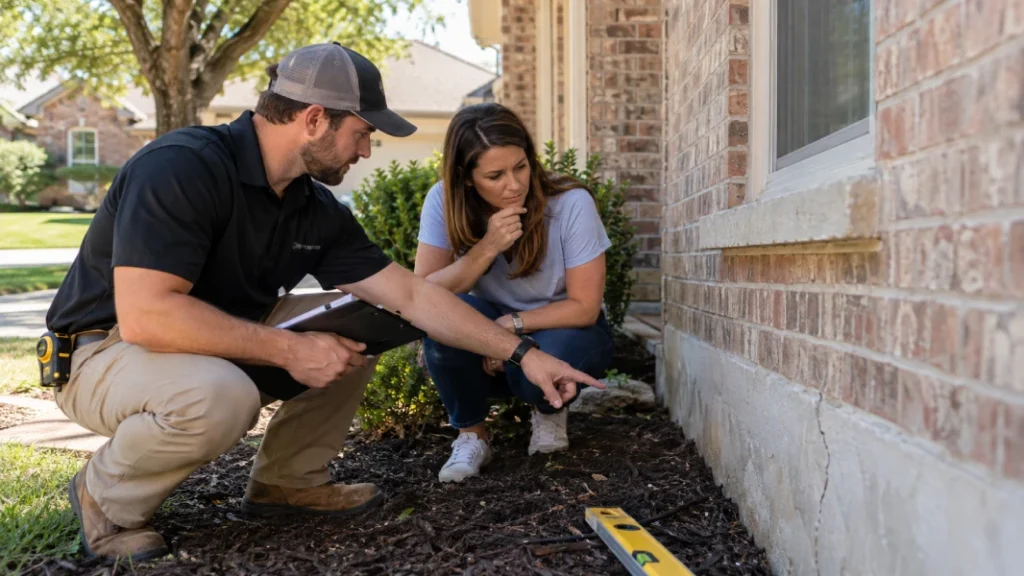
Finding a reliable foundation repair company in Dallas–Fort Worth is an important decision for homeowners dealing with cracks, uneven floors, or structural movement. Foundation repairs can involve significant work, so choosing a contractor who understands your home’s condition and explains the available solutions is essential.
North Texas properties face unique foundation challenges because soil conditions, drainage, and seasonal moisture changes can affect the ground supporting a home. However, not every foundation problem requires the same repair method, and not every contractor will recommend the same approach.
Before hiring a company, homeowners should understand what qualifications to look for, which questions to ask, and how to compare repair proposals.
Understand Your Foundation Repair Needs First
Before contacting foundation repair companies in Dallas, take time to identify the problems affecting your property.
Common concerns include cracked interior walls, sticking doors, uneven flooring, exterior brick separation, and areas where the ground appears to be pulling away from the foundation.
These symptoms may indicate foundation movement, but they can also result from other building conditions. An inspection is needed to determine whether repair work is necessary.
A professional structural foundation inspection can help identify visible movement, evaluate foundation conditions, and determine whether additional testing or engineering guidance is needed.
Understanding the problem before approving repairs can help homeowners avoid paying for work that does not address the underlying cause.
Look for Experience With Dallas–Fort Worth Foundations
Foundation repair is not always the same from one property to another.
Homes throughout Dallas–Fort Worth may have concrete slab foundations, pier and beam systems, or other structural designs. Their repair needs depend on construction, age, soil conditions, drainage, and the extent of movement.
Contractors familiar with North Texas should understand how changes in soil moisture can affect a foundation.
The USDA Natural Resources Conservation Service provides soil survey information that helps explain differences in soil characteristics across geographic areas. However, general soil maps cannot replace a property-specific evaluation.
When speaking with potential contractors, ask whether they regularly work on homes with your foundation type and whether they have experience in your neighborhood.
A company familiar with foundation conditions in Dallas may recognize different challenges from those commonly found in surrounding areas.
For example, homeowners looking for foundation repair services in Dallas should prioritize contractors who can explain how local property conditions influence their repair recommendations.
Check the Company’s Reputation and Customer Reviews
Customer reviews can provide useful information about a foundation repair company’s communication, reliability, and quality of service.
However, a high rating alone does not guarantee that a contractor is the right choice.
Look for reviews describing actual repair experiences rather than short comments that provide little detail.
Pay attention to feedback about:
Whether the company arrived on time
How clearly the inspection findings were explained
Whether the final price matched the proposal
How the crew treated the property
Whether the contractor addressed concerns after completing the work
Recent reviews may be especially helpful because they provide insight into a company’s current operations.
It is also useful to review negative feedback and observe how the company responds to complaints.
The Federal Trade Commission’s home improvement guidance recommends checking contractor reputations, getting recommendations, and comparing estimates before agreeing to home repairs.
A consistent record of clear communication and professional conduct is often more informative than a collection of brief five-star ratings.
Verify Insurance and Relevant Qualifications
Before allowing foundation work to begin, ask about the contractor’s business information, insurance coverage, and qualifications.
Contractors should be able to explain the type of work they perform and provide appropriate documentation when requested.
Ask whether the company carries general liability insurance and whether workers performing the project are covered by applicable insurance arrangements.
Licensing requirements can depend on the type of work and local regulations. Do not assume that every foundation repair contractor is required to hold the same professional license.
If an engineering evaluation is recommended, confirm that the engineer holds the appropriate Texas professional engineering license.
You should also ask whether the company uses its own employees or subcontractors.
This matters because different businesses may handle labor, supervision, warranty claims, and project responsibility differently.
The goal is to understand who will be working on your property and who is accountable for the finished project.
Ask How the Contractor Evaluates Foundation Problems
Reliable foundation repair recommendations should begin with an evaluation of the property rather than a repair proposal based only on a brief conversation.
A contractor may examine interior wall cracks, exterior masonry, floor elevations, door alignment, drainage conditions, and visible areas of the foundation.
Depending on the property, additional testing or an independent engineering assessment may be appropriate.
Ask the contractor to explain what the inspection revealed and why a particular repair method is being recommended.
For example, a home with uneven floors may require foundation leveling, while another property may need drainage improvements or structural support.
A good contractor should explain the difference between the symptoms you can see and the conditions that may be causing them.
Homeowners should also understand whether the recommended work is intended to stabilize the foundation, improve elevation, or accomplish both.
These distinctions can affect the expected results.
Compare Multiple Written Foundation Repair Estimates
Obtaining more than one estimate can help homeowners understand their options before making a decision.
Different foundation repair companies may recommend different methods, materials, or numbers of support points.
A higher estimate does not automatically mean better work, just as a lower estimate does not necessarily represent the best value.
When comparing proposals, look beyond the total price.
A detailed estimate should identify the proposed work, materials, approximate schedule, payment arrangements, and important exclusions.
Ask whether the price includes excavation, cleanup, landscaping restoration, flooring repairs, plumbing tests, and other related services.
Some items may be priced separately.
It is also important to compare the number and placement of support piers when applicable. Two proposals may appear similar while covering very different areas of a home.
Request clarification whenever a contractor recommends work that another company has not mentioned.
A written explanation can make the differences easier to understand.
Understand the Proposed Foundation Repair Method
Foundation repair companies use different techniques depending on the type of structure and the problems identified.
Concrete slab homes may require support piers or other stabilization systems. Pier and beam foundations may involve adjustments to support posts, beams, joists, or piers beneath the home.
Drainage correction may also be necessary when water repeatedly collects near the foundation.
The appropriate method should reflect the actual structural condition rather than a general promise to fix every crack.
Ask whether the proposed repair is intended to correct settlement, reduce further movement, replace damaged structural components, or improve site drainage.
Homeowners should also ask what changes they can realistically expect after the project.
For instance, stabilizing a foundation does not necessarily mean every floor will become perfectly level or every wall crack will disappear.
Understanding these limitations before signing a contract can prevent misunderstandings later.
Review Warranty Terms Carefully
Many homeowners consider the warranty an important part of choosing a foundation repair contractor.
However, warranties vary between companies.
Some cover specific repaired areas, while others may contain limitations related to soil movement, plumbing leaks, drainage, or future structural changes.
Before accepting a proposal, request the warranty terms in writing.
Check which repairs are covered, how a warranty claim is submitted, and whether inspection or service fees may apply.
Also ask whether the warranty is transferable if the property is sold.
A warranty should not replace careful evaluation of the contractor’s experience and proposed repair method.
Instead, it should be one factor in the overall decision.
Watch for Common Warning Signs When Hiring
Homeowners should be cautious when a contractor uses pressure tactics or refuses to explain important details.
Be careful with companies that insist you must sign immediately to receive a discount.
Other concerns include requests for full payment before work begins, vague written estimates, reluctance to provide insurance information, and promises that cannot be explained.
Foundation movement can be a serious issue, but most repair decisions still deserve careful consideration.
If the situation is not an immediate safety emergency, take time to compare recommendations and understand the proposed work.
A responsible contractor should be willing to answer reasonable questions about the repair process.
Consider Communication and Customer Support
Technical experience matters, but communication is also important during foundation repairs.
Homeowners should know whom to contact when questions arise, how the project will be scheduled, and what preparations are required.
Ask whether furniture needs to be moved, whether access to the crawl space is necessary, and whether any landscaping or flooring may be disturbed.
A clear explanation of these details helps homeowners prepare for the work and reduces unexpected disruptions.
It is also useful to understand how changes to the original repair plan will be approved.
If additional work becomes necessary, the contractor should explain the reason and provide updated pricing before proceeding.
Find Foundation Repair Contractors Serving Your Area
Homeowners across North Texas may have different foundation repair needs depending on their property and location.
A contractor serving Fort Worth should understand that the city’s neighborhoods include different building styles, soil conditions, and foundation systems.
Those looking for foundation repair contractors in Fort Worth can begin by reviewing local service options and requesting a property evaluation.
DFW Foundation Services helps connect homeowners with foundation repair professionals serving communities throughout the Metroplex.
The directory allows homeowners to explore available foundation repair services and request assistance based on their location and foundation concerns.
Actual inspections, repair recommendations, pricing, and warranty terms are provided by the independent contractor.
Final Thoughts
Choosing a reliable foundation repair company in Dallas–Fort Worth requires more than comparing prices or online ratings.
The best approach is to understand your property’s condition, review the contractor’s experience, ask detailed questions, and compare written proposals carefully.
A qualified professional should explain the recommended repair method and help you understand what the work can realistically accomplish.
If your home has noticeable foundation movement or structural concerns, DFW Foundation Services can help connect you with local contractors who provide inspections and foundation repair solutions.
Frequently Asked Questions
How do I find a reliable foundation repair company in Dallas?
Start by researching local contractors, reviewing customer feedback, confirming insurance information, and requesting written estimates. Compare the recommended repair methods before selecting a company.
Should I get multiple foundation repair estimates?
Yes. Multiple estimates can help you compare repair recommendations, materials, warranties, and costs. Make sure each proposal covers comparable work.
What questions should I ask a foundation repair contractor?
Ask about experience with your foundation type, inspection findings, recommended methods, expected results, warranty coverage, insurance, and the total project scope.
Does every foundation repair require an engineer?
Not every project requires an engineering report. An independent engineer may be appropriate for complex structural concerns, conflicting recommendations, or situations requiring professional documentation.
Are foundation repair warranties transferable?
Some warranties are transferable, while others are not. Always review the written conditions and ask the contractor to explain any transfer requirements.
Request a foundation inspection
Get a free foundation inspection from a trusted DFW specialist.