
- Foundation Problems
Why North Texas Clay Soil Causes Foundation Damage
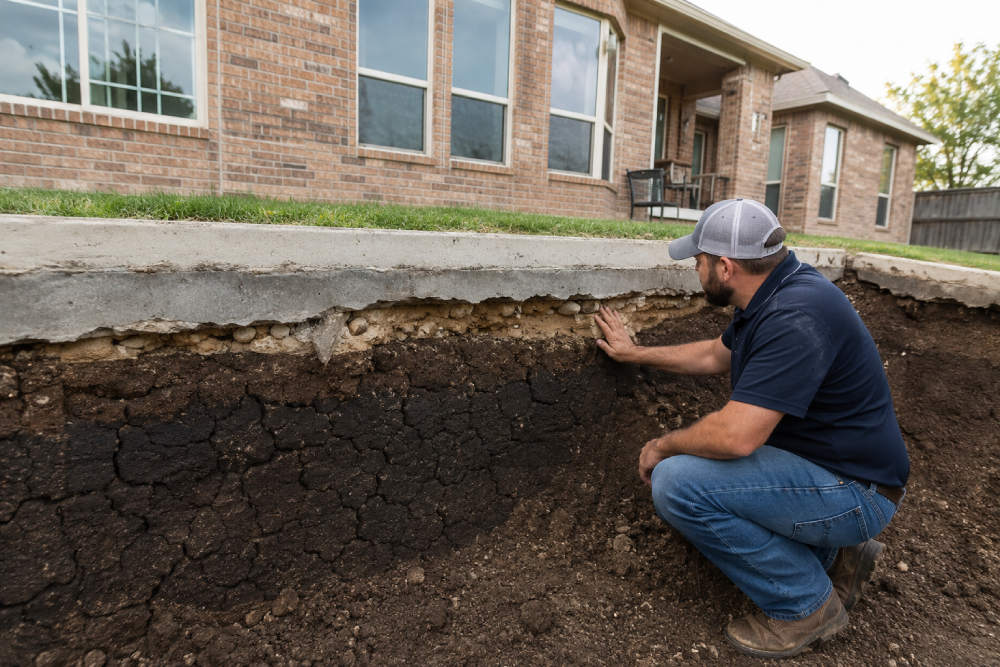
Many homes in Dallas Fort Worth are built on soil with a high clay content. Clay can support a home successfully, but it reacts strongly to moisture changes. During wet periods, the soil can absorb water and expand. During drought and extreme heat, it can lose moisture and contract. Repeated cycles can place uneven pressure on a foundation.
For more information about clay content and soil identification, see the Texas A&M AgriLife field guide to soil texture and the United States Geological Survey swelling clay map.
The United States Geological Survey describes expansive soils as soils that shrink or swell as moisture content changes. Structures built on them may experience shifting, cracking, and related damage. This process helps explain why foundation movement is a familiar concern across North Texas.
How Expansive Clay Soil Behaves
Clay particles are very small and have a large surface area relative to their size. Water can interact with these particles and change the volume of the soil. When moisture increases, certain clay soils swell. When moisture decreases, they shrink and may pull away from the foundation.
The movement is not always even. One side of a house may receive more shade, irrigation, or runoff. Another side may dry faster because of direct sun, tree roots, or poor grading. Uneven soil conditions can cause one portion of the foundation to rise or settle more than another.
Why Drought Can Be Hard on Foundations
Long hot periods can remove moisture from the upper layers of soil. Cracks may develop in the ground, and gaps can appear along the slab. Trees and large shrubs may compete for moisture near the home, which can increase drying in localized areas.
As the soil contracts, support beneath part of the foundation may decrease. The structure can settle into the lower area. Homeowners may notice new wall cracks, sticking doors, uneven floors, or separation in exterior brickwork.
Why Heavy Rain Can Also Create Problems
After a dry period, heavy rain can rapidly change soil moisture. Clay may absorb water and expand. If drainage directs water toward one side of the home, that area may experience more swelling than the rest of the foundation.
Standing water can also contribute to erosion or soften soil near the perimeter. Gutters, downspouts, surface drains, and grading should direct water away from the structure while maintaining reasonably consistent moisture conditions.
The Role of Trees and Landscaping
Mature trees can draw significant moisture from the soil. The risk depends on the tree type, size, distance from the home, root pattern, and local soil conditions. Removing a tree without professional guidance may also change moisture conditions suddenly.
A foundation specialist, arborist, or drainage professional can help evaluate whether root barriers, irrigation adjustments, pruning, or another strategy is appropriate. The goal is to manage the site without creating an abrupt new imbalance.
How Homeowners Can Reduce Soil Related Risk
Keep gutters clean and make sure downspouts release water away from the slab. Correct low areas where water collects. Repair leaks quickly, including irrigation and underground plumbing leaks. Maintain landscaping so that one side of the home is not consistently saturated while another side stays extremely dry.
During drought, ask a local professional about appropriate moisture management for your property. Overwatering can create problems, so the objective is consistency rather than soaking the soil. Monitor visible cracks and changes inside the home.
When Foundation Repair May Be Needed
Soil movement does not automatically mean that repair is required. Some homes remain stable with maintenance and monitoring. Repair may be recommended when elevation measurements and visible symptoms show that movement is affecting the structure.
The repair method depends on the foundation type, movement pattern, site conditions, drainage, and plumbing. A complete evaluation should address both structural support and the moisture conditions that contributed to the problem.
Final Thoughts
Foundation concerns are easier to manage when you understand the cause and act on reliable information. If your Dallas Fort Worth home shows cracks, uneven floors, sticking doors, drainage concerns, or other signs of movement, schedule a professional inspection. DFW Foundation Services can evaluate the property, explain the findings, and recommend a practical next step based on the condition of your home.
Frequently Asked Questions
Is all North Texas soil expansive clay?
No. Soil conditions vary by location and even across one property. Many areas contain clay rich soils, but testing and local evaluation provide better information for a specific home.
Can watering prevent foundation damage?
Consistent moisture management may reduce extreme soil changes, but too much water can also cause problems. Follow guidance that fits the property and drainage conditions.
Do trees always damage foundations?
No. Trees provide many benefits. Risk depends on species, size, location, soil, moisture demand, and the condition of the home.
Will piers solve soil movement permanently?
Piers can provide deeper support when properly designed, but drainage, plumbing, and site moisture still need attention after repair.
Request a foundation inspection
Get a free foundation inspection from a trusted DFW specialist.