
- Service Area Guides
Foundation Repair in Frisco TX: What Homeowners Should Know Before Hiring a Contractor
Frisco is one of the fastest-growing cities in Texas, and that growth means the local housing stock is a mix of brand-new construction still settling into place and older homes that have been through years of North Texas weather. Both situations can lead to foundation concerns, but the causes and the right response often look different depending on when the home was built. If you’re researching foundation repair in Frisco, here’s what’s worth understanding before you call a contractor.
Why Frisco Homes Experience Foundation Movement
Like much of the Dallas–Fort Worth Metroplex, Frisco sits on expansive clay soil that shrinks during dry periods and swells when it absorbs moisture. In newer subdivisions, foundations may still be settling into freshly graded, compacted soil, which can produce minor movement in the first few years after construction. In older parts of the city, decades of seasonal soil movement, mature landscaping, and drainage patterns that have shifted over time tend to be bigger factors. Recognizing which situation applies to your home helps set expectations for what an inspection might find.
New Construction vs. Established Homes
Newer Frisco homes sometimes show minor cosmetic cracking or slight door misalignment as the structure and soil settle together, which isn’t automatically a sign of a serious foundation problem. Still, any movement should be documented and monitored, and if it continues past the first year or two, it deserves a professional look. Established homes are more likely to show issues tied to long-term clay soil cycling, aging drainage systems, or tree roots that have grown closer to the foundation over the years. A structural foundation inspection can help determine which category applies and whether the movement is still active.
Common Signs Frisco Homeowners Notice
- Cracks in interior drywall or exterior brick and mortar joints
- Doors or windows that no longer open and close smoothly
- Uneven or sloping floors in certain rooms
- Gaps between baseboards and flooring
- Standing water near the foundation after rain, which is common in newer subdivisions where grading is still settling
Permits and Local Requirements
Foundation repair work in Frisco, like most structural work, may require a permit depending on the scope of the project. The City of Frisco’s Building Inspections Division handles permitting and inspection for residential construction and repair projects, and a reputable local contractor should be able to tell you upfront whether your specific repair plan requires one. Skipping a required permit can create complications later, particularly if you sell the home and a buyer’s lender or insurer asks for documentation of past foundation work.
Drainage is worth paying close attention to in newer Frisco subdivisions especially, since freshly graded lots don’t always shed water as effectively as established landscaping does. InterNACHI’s guidance on lot drainage in areas with expansive soils notes that standing water near a foundation can contribute to soil movement and crawl space moisture problems if it isn’t corrected.
What a Frisco Foundation Repair Plan Typically Includes
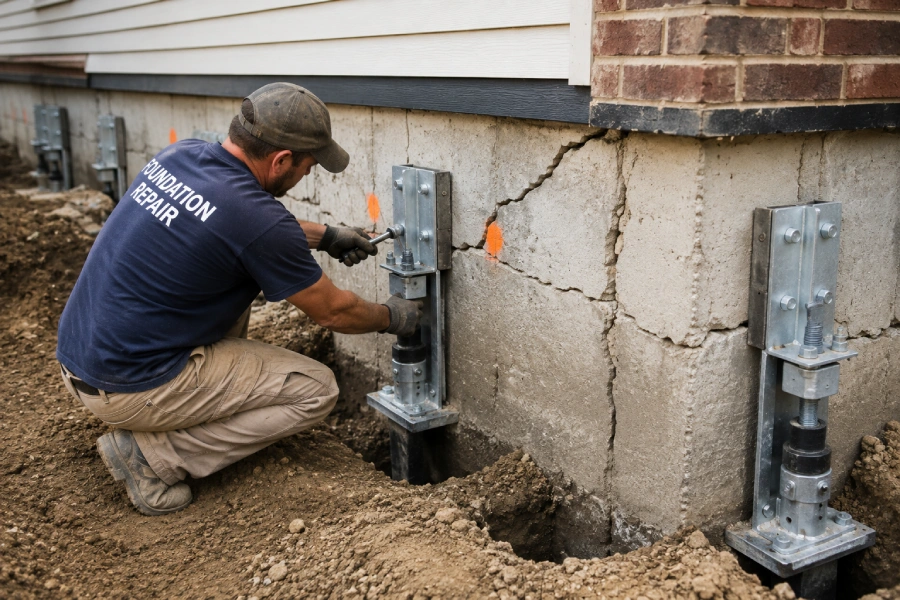
Whether the home has a concrete slab or a pier and beam foundation, a typical repair plan starts with an inspection to document elevation readings and crack patterns, followed by a recommendation for the number and placement of piers or supports needed to stabilize the structure. Many Frisco repair plans also include a drainage review, since correcting how water moves around the home can reduce the chance of the same movement recurring. In some cases, an engineer report is recommended, particularly for larger projects or when documentation is needed for a real estate transaction.
Questions to Ask a Frisco Foundation Contractor
Ask what specific evidence led to the recommended repair, whether the estimate includes drainage corrections, what warranty applies, and whether the contractor is familiar with the soil conditions in your particular neighborhood —soil behavior can vary noticeably even within the same city. It’s also reasonable to ask whether the contractor pulls the necessary city permits as part of the project or expects the homeowner to handle that step.
Get a Local Frisco Inspection
DFW Foundation Services connects Frisco homeowners with experienced local contractors who understand both new-construction settling and long-term soil movement issues common throughout the city.
Frequently Asked Questions
Is foundation movement common in newer Frisco homes?
Some minor settling is common in the first year or two after construction. Movement that continues beyond that window, or that's accompanied by multiple warning signs, should be evaluated.
Do all foundation repairs in Frisco require a permit?
It depends on the scope of the work. Contact the City of Frisco's Building Inspections Division or ask your contractor directly, since requirements can vary by project type.
How is Frisco's soil different from other parts of DFW?
Frisco sits on the same general expansive clay soil found throughout North Texas, though conditions can vary by neighborhood depending on grading, drainage, and how recently the area was developed.
Should I get more than one estimate for foundation repair in Frisco?
Yes. Comparing scope, materials, and warranty terms across a few estimates helps you understand whether a lower price reflects less work rather than better value.
Request a foundation inspection
Get a free foundation inspection from a trusted DFW specialist.